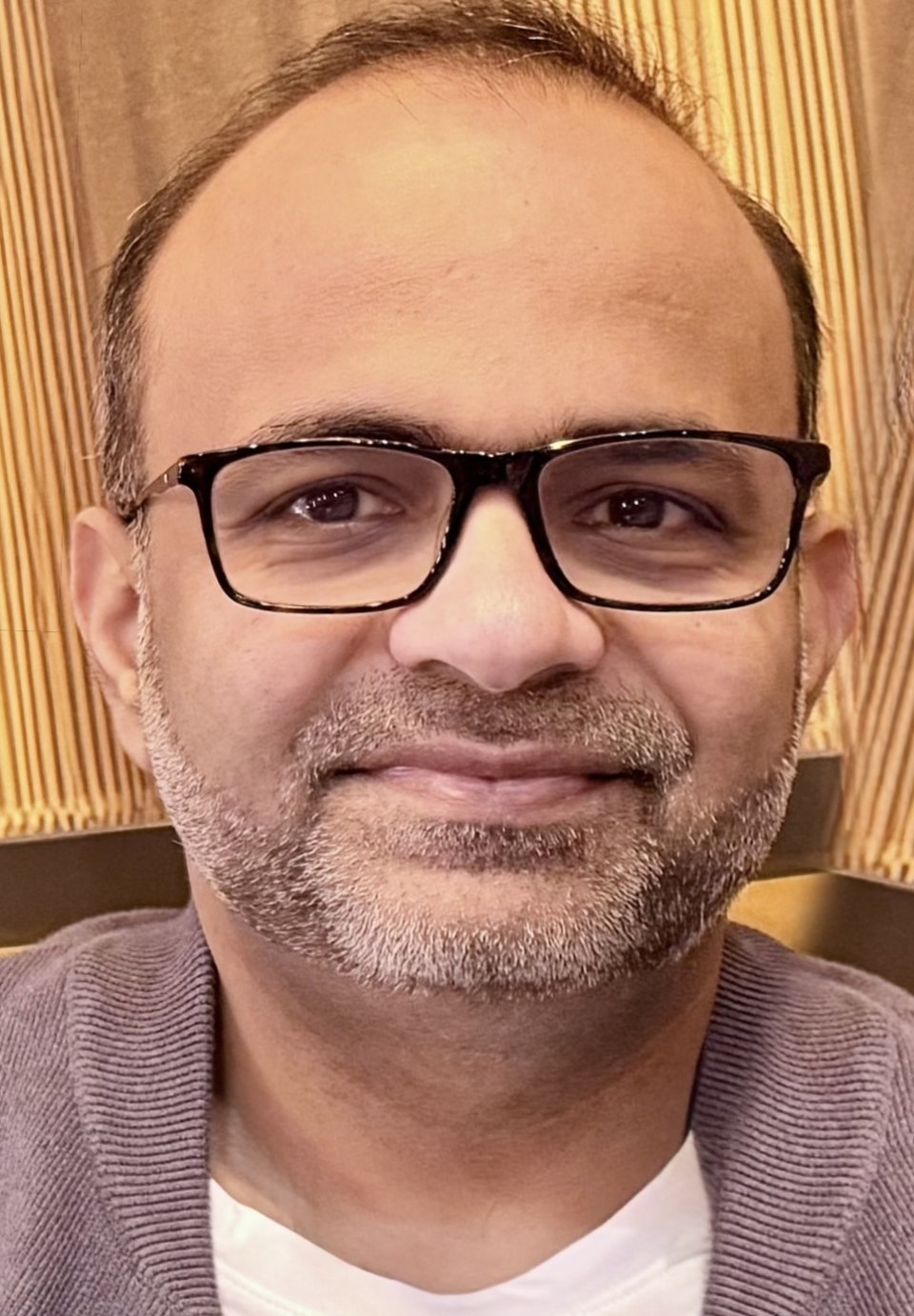
Saurav Mishra was born into humble circumstances and escaped them by earning an engineering degree from IIT. That education carried him from India to London and into capital-markets technology, where he has worked for two decades — the last nine as a director at an investment bank, leading architecture and reporting to the chief information officer.
He developed the framework presented in this book over the last decade, and now uses it, through Dhruv, to deploy his own capital. The Missing Map is his first book — the first step in a longer intention: that serious investing should be learnable by anyone willing to give it a few honest hours a week, not a privilege of birth, training, or a team behind you.
The Missing Map
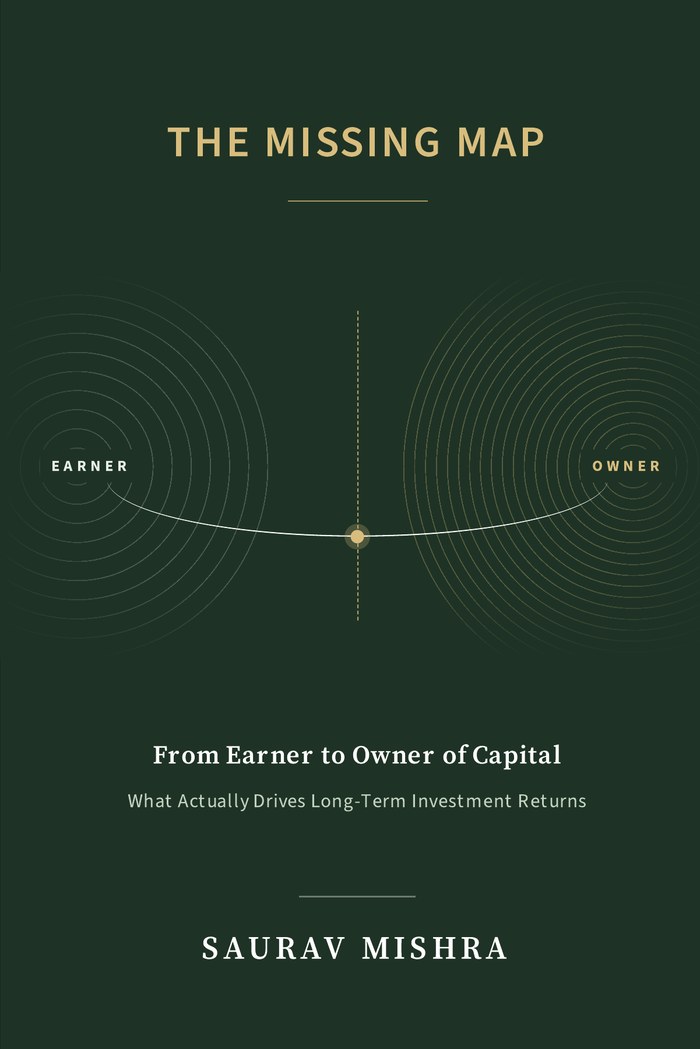
You were not born into wealth. You escaped the gravity of the lower middle class the only way open to you: a hard degree, an even harder profession, and years of establishing yourself in it. Today you earn well, and the discipline of your upbringing turned saving into habit. So, for the first time, there is real capital with your name on it.
And yet you feel something is missing. Your capital runs on autopilot — and you could not say what it is doing for you. You sense the people born into wealth understand something you don't. They are not smarter, but they handle capital with an ease you have never felt, as if they were given a map at birth that you were never shown.
Wealth rests on three skills — earning it, keeping it, deploying it. You have two of the three, and the one you are missing is the one that compounds. This book is that missing map.
Paperback, 6×9 · on Amazon
The Missing Map is the framework. Dhruv helps you use it.
Investing usually starts with three questions, in this order. How should I allocate my capital right now? Is this sector worth playing in? Is this security worth owning?
Dhruv has one companion for each question. The first looks at the economic and market cycle. The second looks at a sector. The third looks at one company. If you use them in order, each one passes useful information to the next.
It is free: no purchase required, no sign-in, no proof you own the book. It runs on your own AI account, and nothing you enter comes back to me.
-
1How should I allocate my capital right now?Asset allocationThis is the first question, and the one you need to ask least often. Dhruv looks at where we are in the economic and market cycle and gives you an asset allocation across equities, cash, bonds and other asset classes. It also gives you a short macro summary that you can paste into the sector companion.Open the asset allocation companion
-
2Is this sector worth playing in?Sector analysisBefore analysing a company, understand the sector it operates in. Dhruv uses the macro summary from step 1 and looks at the sector itself: where it is in its cycle, what is driving it and how it may respond to the wider market. It gives you a sector analysis and a short summary that you can paste into the company companion.Open the sector companion
-
3Is this security worth owning?Company analysisNow look at the individual company. Paste in the sector summary from step 2 and Dhruv analyses the business, its earnings, its finances, the price you are being asked to pay and what the company may be worth. It gives you a detailed company analysis, a valuation range and a clear conclusion, including what could make that conclusion wrong.Open the company companion
Start broad, then narrow down
You do not need to redo everything for every company. Your view of the economic and market cycle changes relatively slowly, so do that work once and reuse it: the first companion gives you an asset allocation and a macro summary, and you paste that summary into the second. Understand the sector when you are thinking about investing in it; the second companion hands the third a short sector summary in the same way. Only then do the detailed work on an individual company — with the wider market and the sector already in view.
Before you start
Dhruv is an AI, and a confident wrong answer reads exactly like a right one. It carries the arithmetic and holds the method steady; it cannot tell you whether the assumptions underneath are sensible. That judgement stays yours. Data goes stale — check every figure against the source before you act on it. Nothing it produces is investment advice. And it is a companion to the book, not a replacement for it: when it points you to a chapter, the chapter carries the reasoning it can only summarise.
Dhruv will keep evolving
Dhruv will keep evolving — as readers tell me what works and what does not, and as AI itself improves. Leave your email and I will tell you when a new version lands. Now and then I will also send other things worth sharing: how I am using the framework in real markets, and what I am changing in Dhruv and why. Nothing else, and you can leave whenever you like.
The channel runs both ways — reply to any of those emails and it reaches me directly.
You will get a confirmation email first — the newsletter starts once you click it.